Quick Question: Sump pump kicked on at 2am again? Ever wondered whether your basement is actually protected, or just getting lucky so far?
Maple Ridge gets a lot of rain, and plenty of the pipes under older homes here were never built for that much water. A backwater valve is the one piece of gear that stops city sewage from coming up your floor drain when the main line backs up. Everything else is about keeping storm water out of a pipe that’s meant for toilets and sinks.
Key Takeaways
- Maple Ridge is one of the spots Metro Vancouver flags for high inflow and infiltration, which is the polite way of saying rainwater and groundwater are getting into sanitary sewers.
- BC’s plumbing code requires backwater protection for fixtures below street level where backflow is possible. For a lot of homes, that’s not an upgrade. It’s the rule.
- A valve that’s stuck open, jammed with grease, or buried under a shelf is worse than having nothing, because you’ll trust it.
- Roof downspouts and weeping tiles tied into the sanitary sewer are behind a huge share of backups. The City is fog-testing neighbourhoods to find them.
- Older clay tile and concrete pipes crack and shift. Tree roots get in. Then everything else gets stuck.
Why Does Backwater Valve Installation in Maple Ridge Matter So Much?
Because the sewer here takes on more water than it was designed to carry, and it doesn’t take a disaster to overload it.
Metro Vancouver’s own data puts Maple Ridge among the municipalities with high inflow and infiltration. That’s rainwater and groundwater leaking into sanitary pipes through cracked joints, bad connections, and pipes that have shifted over the decades. When a storm rolls through in November, those pipes fill up. The water needs somewhere to go. Usually that’s the lowest point, and the lowest point is your basement floor drain.
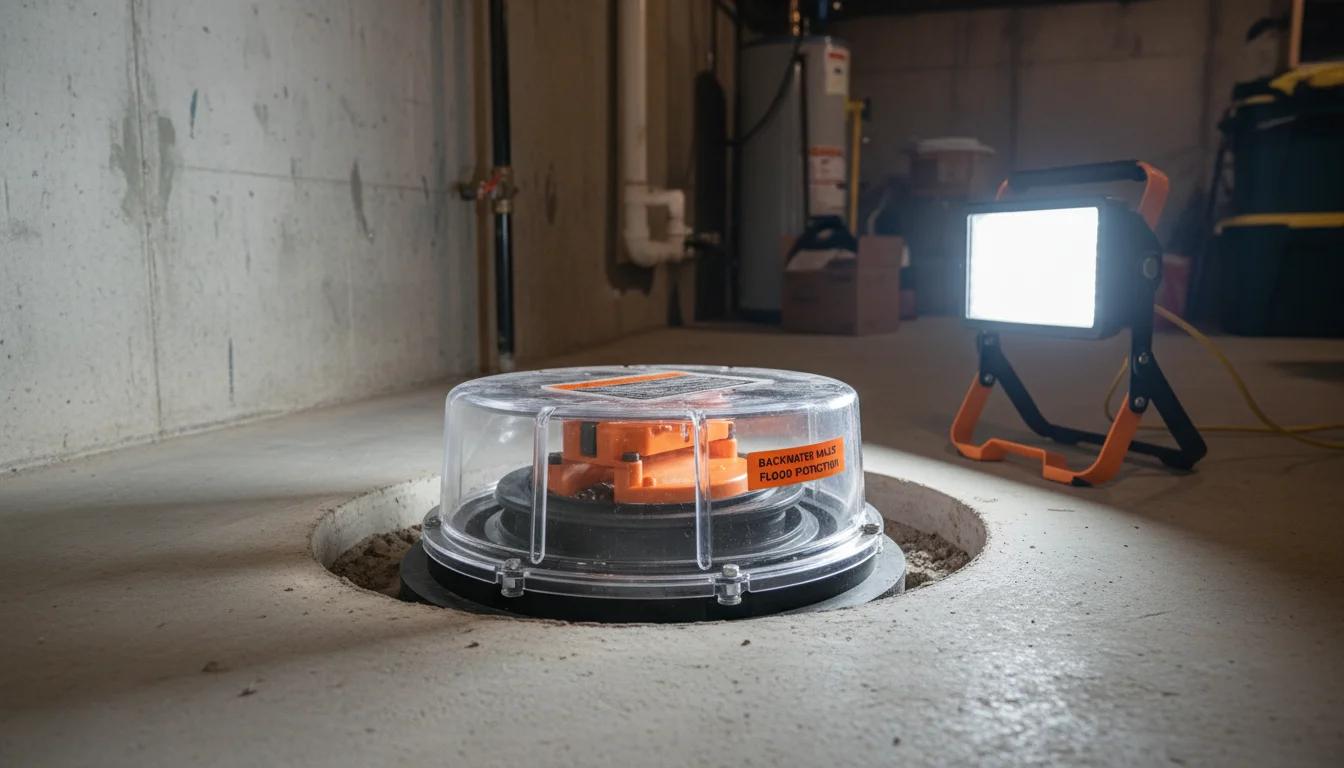
A backwater valve installation Maple Ridge is a flap inside the pipe. Waste flows out and pushes it open. If the main backs up, the flap drops shut and seals. Simple as that.
BC’s plumbing code requires backwater protection on fixture drains below street level where backflow is possible. The City of Maple Ridge is also running fog tests in neighbourhoods to track down where storm water is sneaking into the sanitary system. If the problem sits on private property, the homeowner pays to fix it. Backwater Valve Installation in Maple Ridge done properly is the first thing worth sorting, not the last.
How Does a Backwater Valve Actually Stop Sewage From Coming Up Your Drain?
It’s a mechanical gate. Water going out holds the flap open. Water trying to come back in drops it closed.
Where it goes matters more than what it costs. The valve has to sit on the building drain, the main pipe carrying waste out of the house, before it meets the city sewer. Put it in the wrong spot or buy the wrong size and it either won’t seal or it’ll choke your normal flow.
Then there’s the bit nobody tells you at handover. The valve needs to be reachable so it can be opened, checked, and cleaned. Grease and wipes and grit build up on the seat, and a flap that can’t close all the way is a flap that won’t save you. If you’ve lived in a house for years and never once opened the valve, you don’t actually know if it works.
What Happens When Roof and Foundation Drains Are Connected to the Sanitary Sewer?
This one hides in plain sight, and it’s behind a lot of the mess.
Downspouts and foundation drains are supposed to send water to the storm system or a soakaway on the property. When they’re tied into the sanitary sewer instead, every rainstorm dumps hundreds of litres into a pipe sized for household waste. Do that on one street and the main starts surging.
Metro Vancouver is direct about it. Private property owners are responsible for making sure roof and foundation drains are connected correctly, and wrong connections are a major source of inflow. So if you don’t know where your downspouts actually go, that’s worth ten minutes of investigating before the next atmospheric river shows up.
Why Do Tree Roots and Old Pipes Make Maple Ridge Basements More Vulnerable?
Older housing stock around here was often built with pipes that roots can walk straight into.
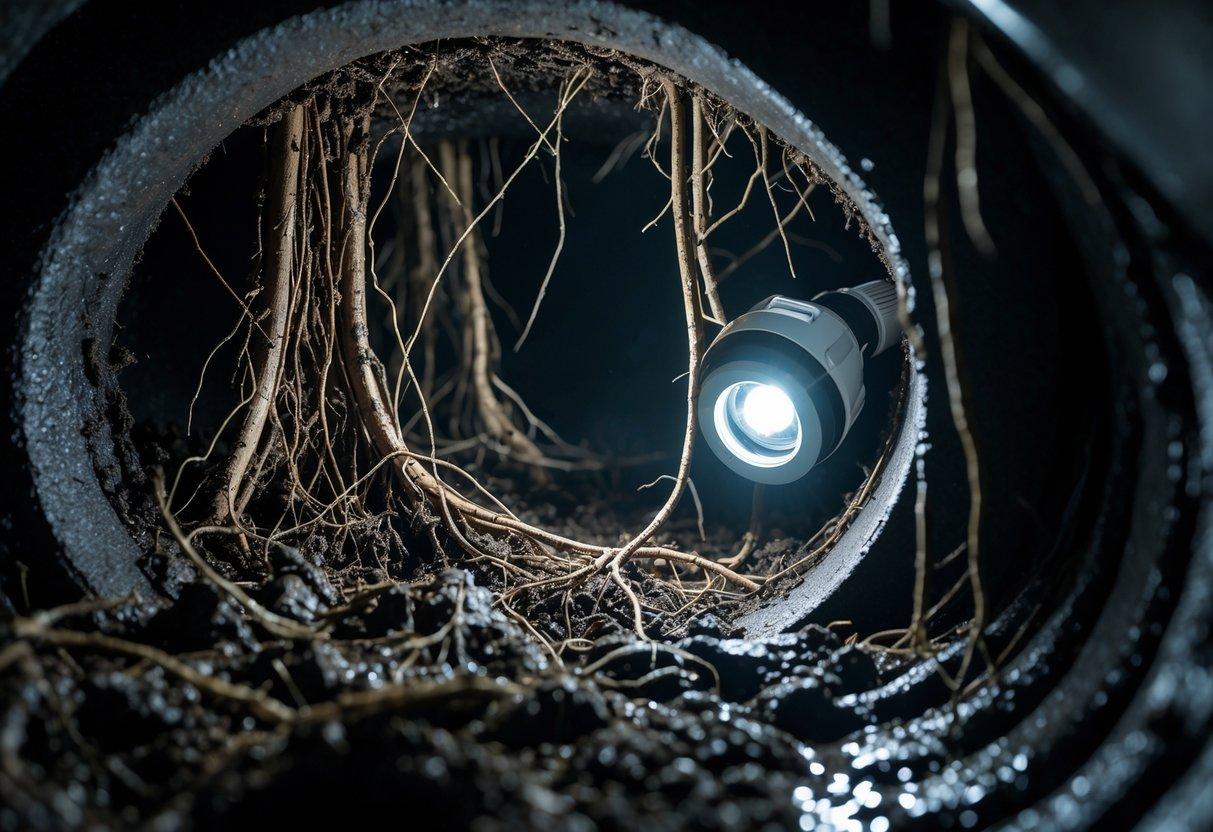
Clay tile and concrete sewer lines from before the 1980s crack, shift, and open up at the joints. Tree roots find those gaps, push through, and grow into a mat inside the pipe. That mat catches grease and wipes and whatever else comes along, and the line narrows until it blocks.
Once it’s blocked, the next heavy rain has nowhere to go except back toward your house. A camera inspection is the only honest way to know what’s happening inside that pipe. And if roots are already in there, a backwater valve alone won’t fix it. The line needs clearing or repair first, or you’re just putting a good gate on a blocked road.
What Should You Stop Putting Down the Drain?
Anything that isn’t pee, poo, or toilet paper.
Metro Vancouver’s guidance on this is pretty blunt. Grease, wipes, paper towels, dental floss, and anything labelled “flushable” don’t break down like toilet paper does. They cling to pipe walls, snag on roots, and build the blockage that turns a rainy week into a flooded basement.
Most backups start as a partial clog nobody noticed. The pipe’s half shut, the storm hits, the main backs up, and the valve has to hold against a line that’s already struggling. Keeping the drain clear is the cheapest insurance you’ll ever buy.
How Do You Maintain a Backwater Valve So It Actually Works?
Open it, look at it, clean it. Once or twice a year, more if you’ve got big trees nearby.
The lid usually comes off. Inside, the flap should move freely and the seat should be clear of grit and grease. Some newer valves come with an alarm that tells you if the flap is stuck open or if water is backing up. Worth having.
Check it after any major rain too. If it’s been working hard, debris collects on the upstream side. Two minutes with a flashlight beats a restoration crew and a insurance claim.
Who Should You Call Before the Next Big Rain?
Call someone who knows Maple Ridge lines, knows the code, and will camera the pipe before quoting you a valve.
Order of operations matters. Inspect first, to confirm the line is clear and structurally sound. Then size and locate the valve on the building drain. Then install, test, and show the homeowner how to look after it. Skip the inspection and you get a valve that can’t close because the pipe is half full of roots.
Not sure if your place already has one? Have a look in the basement for a round plastic lid in the floor near the foundation wall. Nothing there means it’s the first question to ask.
Wrapping it up
Sewer backups around Maple Ridge aren’t bad luck. They’re what happens when heavy rain meets aging pipes and storm water that shouldn’t be in the sanitary line at all. A backwater valve, installed right and actually maintained, is the one thing standing between the city main and your basement floor.
Want the line inspected, the valve sized and fitted properly, and someone to walk you through looking after it? Contact our team at Kinsley Irrigation and we’ll tell you what your pipe actually needs before anyone picks up a wrench.