It’s a quiet Tuesday morning at a townhome complex in Maple Ridge. A resident calls the property manager to say the walkway by building C is soaked, and it’s only 7 a.m. When the manager goes to look, there’s a broken sprinkler head shooting water straight onto the pavement. Further along, the lawn is brown because a whole zone hasn’t been running properly for weeks.
Nobody noticed because nobody was checking. The system just ran on its timer, day after day, and slowly wasted water and money.
Stories like this are common in multi-unit properties. Irrigation sits out of sight, so it gets forgotten until something goes wrong. That’s why strata councils and property managers keep asking the same question: how often should the system be inspected?
The short answer is that strata irrigation systems in Maple Ridge & nearby areas should be checked at least three times a year, with one more annual test for the backflow preventer. Here’s why, and what each visit should cover.
Why do strata properties need more attention than a single home?
A house usually has a handful of sprinkler zones. A strata complex can have dozens, spread across front lawns, side gardens, entrances and shared green space. More zones mean more heads, more valves and more pipe, which means more places for something to go wrong.
There’s also a bigger cost when it does. A leak at a private home affects one family. A leak at a strata property can soak a shared walkway, flood a parking area or run up a water bill that every owner ends up sharing. Wet pavement is also a slip risk, which matters for the strata’s liability.
On top of that, strata properties usually have a budget, a council and a meeting schedule. A problem that sits for a few months can turn into a long conversation about who noticed what and when. Regular inspections avoid that.
How often should you inspect the system?
For most properties around Maple Ridge, a schedule built around the seasons works best.
Spring start-up (March to April). After a wet, cold winter, the system gets turned back on and checked. Crews look for leaks, cracked pipes, damaged heads and valves that stuck over winter. They also test the pressure and set the controller for the new season.
Mid-season check (July or August). By midsummer, sprinkler heads have shifted, nozzles have clogged and the grass has changed. A mid-season visit checks coverage, fixes dry spots and wet spots and adjusts run times so you’re not overwatering. This is also a good time to confirm that the schedule fits the current watering rules.
Fall winterization (October to November). Before the first hard frost, the water is blown out of the lines so the pipes don’t freeze and crack. The Fraser Valley does get freezing nights, and a split pipe is a costly repair.
That’s three visits a year. They line up with how the system is actually used, so each one has a clear purpose.
What about backflow testing?
This one is separate, and it’s easy to overlook.
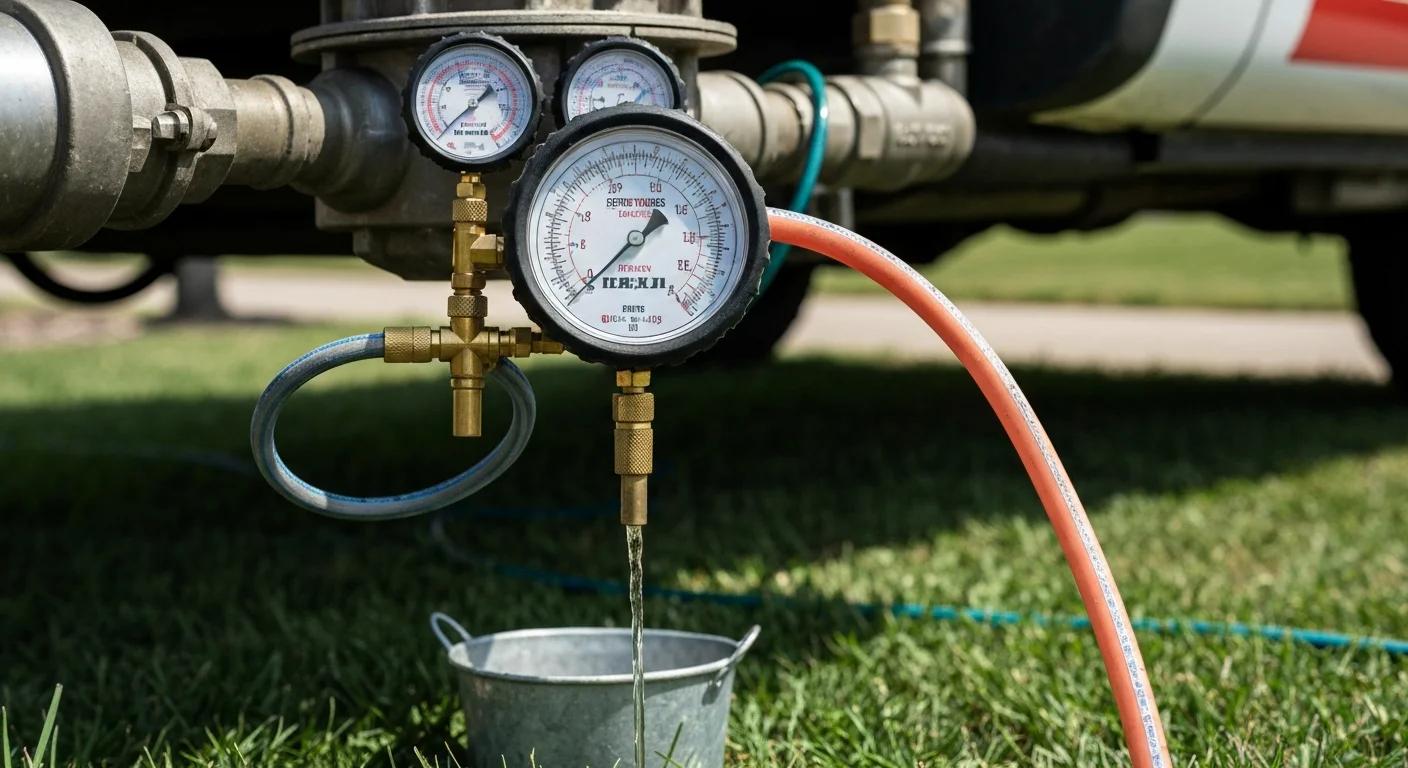
A backflow preventer stops dirty irrigation water from flowing backwards into the drinking water supply. In BC, these devices generally need to be tested every year by a certified tester, and many municipalities, including those in Metro Vancouver, expect a record of it. Rules can differ by property, so it’s worth confirming the current requirements with the District of Maple Ridge.
Many strata properties schedule the backflow test along with the spring start-up, since the crew is already on site. Either way, keep the test report. It’s proof that the strata has done its part.
What actually happens during an inspection?
A good inspection is more than turning the system on and looking at it.
The technician runs each zone one at a time and watches for broken or sunken heads, misaligned spray patterns, leaks and low pressure. They check the valves, the controller and any rain sensors. They look for water running onto walkways, buildings or roads, and for areas that stay soggy or dry out.
They also check that the program fits the property. Different areas need different amounts of water. Shady beds, sunny lawns and slopes shouldn’t all get the same schedule. After the visit, the strata should get a short report with what was found and fixed, plus any recommendations.
What are the signs it needs checking sooner?
Don’t wait for the next scheduled visit if you notice any of these:
- Brown or yellow patches in the lawn
- Puddles or soggy ground that don’t drain
- Water spraying onto walkways, driveways or buildings
- A sudden jump in the water bill
- Sprinklers that pop up unevenly, or not at all
- A running sound when the system should be off
Heavy rain, a windstorm, landscaping work or a mowing accident can also damage heads and lines. A quick check after any of those can catch small problems early.
Do strata councils need to keep records?
It’s a good idea, and it can save a lot of trouble.
Keeping a simple file with inspection reports, repair invoices and backflow test results gives the council a clear history. It helps when preparing the annual budget, answering owner questions at the AGM and planning bigger repairs or upgrades. If a pipe fails years from now, the records show the system was looked after.
Many property managers also add the three seasonal visits to the strata’s yearly maintenance calendar, so nothing gets missed when the manager or council members change.
Can a smart controller reduce the work?
It can help, but it doesn’t replace inspections.
A smart controller adjusts watering based on weather, so the system doesn’t run during or right after rain. That can cut water use and keep the lawn healthier. But a controller can’t fix a cracked pipe or a clogged head. Think of it as a good tool to make each inspection work harder, not a reason to skip them.
What does it cost to skip inspections?
More than the inspections themselves.
Small problems grow. A $20 sprinkler head left broken can waste thousands of litres over a season. A frozen line can mean digging up and replacing pipe. Dead lawn means re-sodding. And a soaked walkway can lead to a complaint or a claim.
Regular visits are predictable and easy to put in the budget. Emergency repairs aren’t.
The bottom line
For most strata properties in Maple Ridge, the right rhythm is simple: a spring start-up, a mid-season check and a fall winterization, plus a yearly backflow test. Add extra checks after storms or when you see warning signs, and keep your reports on file. It’s a small routine that protects your water bill, your landscaping and your liability.
If your strata is looking for dependable strata irrigation systems in Maple Ridge & nearby areas, Kinsley Irrigation can handle the whole schedule, from spring start-up and mid-season checks to winterization and backflow testing. We’ve been working with local properties for over 20 years. Call us at 604-465-9780 or get a free quote online and we’ll help you set up a plan that fits your strata.
Frequently Asked Questions
At least three times a year: spring start-up, a mid-season check and fall winterization. Backflow testing is done once a year.
Usually in October or November, before the first hard freeze. Blowing out the lines prevents water from freezing inside the pipes.
In most cases, yes. Backflow preventers generally need an annual test by a certified tester, but please confirm current rules with the District of Maple Ridge.
Common-area irrigation is usually the strata corporation’s responsibility, managed by the council or property manager. Your strata bylaws and documents will have the details.
Often, yes. Fixing leaks, adjusting spray patterns and tuning run times cuts waste, and that shows up in the water bill.